// shelf 2021
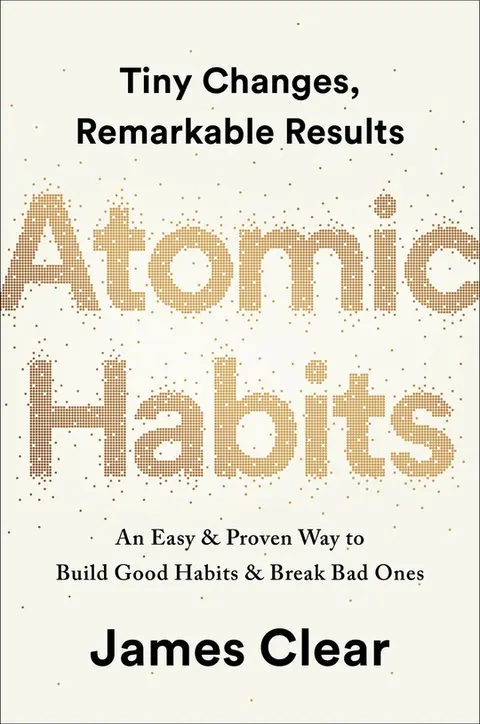
An Easy & Proven Way to Build Good Habits & Break Bad Ones
James Clear
37 highlights read may 2021 find this book ↗
Passages
in reading order
-
01 ❦
each book you read not only teaches you something new but also opens up different ways of thinking about old ideas
-
02
That’s how knowledge works. It builds up, like compound interest
-
03
Breakthrough moments are often the result of many previous actions, which build up the potential required to unleash a major change
-
04
When you finally break through the Plateau of Latent Potential, people will call it an overnight success. The outside world only sees the most dramatic event rather than all that preceded it. But you know that it’s the work you did long ago—when it seemed that you weren’t making any progress—that makes the jump today possible.
-
05
What’s the difference between systems and goals?
-
06
Goals are about the results you want to achieve. Systems are about the processes that lead to those results.
-
07
Winners and losers have the same goals
-
08
Every Olympian wants to win a gold medal. Every candidate wants to get the job. And if successful and unsuccessful people share the same goals, then the goal cannot be what differentiates the winners from the losers
-
09
Achieving a goal only changes your life for the moment
-
10
Fix the inputs and the outputs will fix themselves.
-
11
Achieving a goal is only a momentary change
-
12
goals create an “either-or” conflict: either you achieve your goal and are successful or you fail and you are a disappointment. You mentally box yourself into a narrow version of happiness. This is misguided. It is unlikely that your actual path through life will match the exact journey you had in mind when you set out. It makes no sense to restrict your satisfaction to one scenario when there are many paths to success.
-
13
The purpose of setting goals is to win the game. The purpose of building systems is to continue playing the
-
14
game.
-
15
Outcomes are about what you get. Processes are about what you do. Identity is about what you believe.
-
16
Behind every system of actions are a system of beliefs
-
17
The ultimate form of intrinsic motivation is when a habit becomes part of your identity. It’s one thing to say I’m the type of person who wants this. It’s something very different to say I’m the type of person who is this.
-
18
When you have repeated a story to yourself for years, it is easy to slide into these mental grooves and accept them as a fact.
-
19
The more deeply a thought or action is tied to your identity, the more difficult it is to change it
-
20
Good habits can make rational sense, but if they conflict with your identity, you will fail to put them into action
-
21
Progress requires unlearning
-
22
Becoming the best version of yourself requires you to continuously edit your beliefs, and to upgrade and expand your identity
-
23
The more you repeat a behavior, the more you reinforce the identity associated with that behavior. In fact, the word identity was originally derived from the Latin words essentitas, which means being, and identidem, which means repeatedly. Your identity is literally your “repeated beingness.”
-
24
As the evidence grew, so did my identity as a writer. I didn’t start out as a writer. I became one through my habits.
-
25
The most practical way to change who you are is to change what you do
-
26
Each habit not only gets results but also teaches you something far more important: to trust yourself
-
27
It is a simple two-step process: Decide the type of person you want to be. Prove it to yourself with small wins.
-
28
I have a friend who lost over 100 pounds by asking herself, “What would a healthy person do?” All day long, she would use this question as a guide. Would a healthy person walk or take a cab? Would a healthy person order a burrito or a salad? She figured if she acted like a healthy person long enough, eventually she would become that person. She was right.
-
29
The first step is not what or how, but who.
-
30
they are not about having something. They are about becoming someone
-
31
Becoming the best version of yourself requires you to continuously edit your beliefs, and to upgrade and expand your identity.
-
32
behaviors followed by satisfying consequences tend to be repeated and those that produce unpleasant consequences are less likely to be repeated
-
33
This is the feedback loop behind all human behavior: try, fail, learn, try differently
-
34
With practice, the useless movements fade away and the useful actions get reinforced. That’s a habit forming
-
35
Habits are, simply, reliable solutions to recurring problems in our environment
-
36
Despite their efficiency, some people still wonder about the benefits of habits. The argument goes like this: “Will habits make my life dull? I don’t want to pigeonhole myself into a lifestyle I don’t enjoy. Doesn’t so much routine take away the vibrancy and spontaneity of life?” Hardly. Such questions set up a false dichotomy. They make you think that you have to choose between building habits and attaining freedom. In reality, the two complement each other.
-
37
Habits do not restrict freedom. They create it. In fact, the people who don’t have their habits handled are often the ones with the least amount of freedom. Without good financial habits, you will always be struggling for the next dollar. Without good health habits, you will always seem to be short on energy. Without good learning habits, you will always feel like you’re behind the curve. If you’re always being forced to make decisions about simple tasks—when should I work out, where do I go to write, when do I pay the bills—then you have less time for freedom. It’s only by making the fundamentals of life easier that you can create the mental space needed for free thinking and creativity.
Every passage I highlighted, up to 1,000 words per book.