// shelf 2022
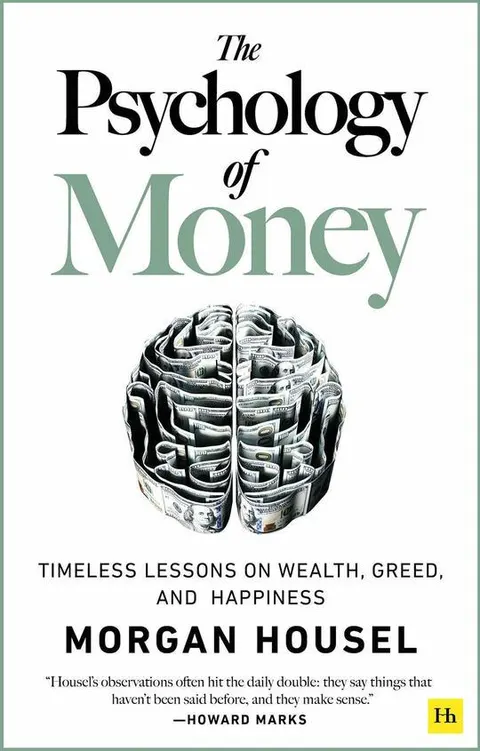
The Psychology of Money
Morgan Housel
147 highlights read dec 2021 → jan 2022 find this book ↗
Passages
18 of 147, in reading order
-
loc. 280 ❦
Dogs were domesticated 10,000 years ago and still retain some behaviors of their wild ancestors. Yet here we are, with between 20 and 50 years of experience in the modern financial system, hoping to be perfectly acclimated.
-
loc. 288
NYU professor Scott Galloway has a related idea that is so important to remember when judging success—both your own and others’: “Nothing is as good or as bad as it seems.”
-
loc. 426
Bill Gates once said, “Success is a lousy teacher. It seduces smart people into thinking they can’t lose.”
-
loc. 519
“Enough” is not too little.
-
loc. 572
If something compounds—if a little growth serves as the fuel for future growth—a small starting base can lead to results so extraordinary they seem to defy logic. It can be so logic-defying that you underestimate what’s possible, where growth comes from, and what it can lead to.
-
loc. 721
No one wants to hold cash during a bull market.
-
loc. 878
A good definition of an investing genius is the man or woman who can do the average thing when all those around them are going crazy.
-
loc. 1044
There is a paradox here: people tend to want wealth to signal to others that they should be liked and admired. But in reality those other people often bypass admiring you, not because they don’t think wealth is admirable, but because they use your wealth as a benchmark for their own desire to be liked and admired.
-
loc. 1144
More importantly, the value of wealth is relative to what you need. Say you and I have the same net worth. And say you’re a better investor than me. I can earn 8% annual returns and you can earn 12% annual returns. But I’m more efficient with my money. Let’s say I need half as much money to be happy while your lifestyle compounds as fast as your assets. I’m better off than you are, despite being a worse investor. I’m getting more benefit from my investments despite lower returns. The same is true for incomes. Learning to be happy with less money creates a gap between what you have and what you want—similar to the gap you get from growing your paycheck, but easier and more in your control.
-
loc. 1267
A rational investor makes decisions based on numeric facts. A reasonable investor makes them in a conference room surrounded by co-workers you want to think highly of you, with a spouse you don’t want to let down, or judged against the silly but realistic competitors that are your brother-in-law, your neighbor, and your own personal doubts.
-
loc. 1535
Can you survive your assets declining by 30%? On a spreadsheet, maybe yes—in terms of actually paying your bills and staying cash-flow positive. But what about mentally? It is easy to underestimate what a 30% decline does to your psyche. Your confidence may become shot at the very moment opportunity is at its highest. You—or your spouse—may decide it’s time for a new plan, or new career. I know several investors who quit after losses because they were exhausted. Physically exhausted.
-
loc. 1652
You can see how this can impact a long-term financial plan. Charlie Munger says the first rule of compounding is to never interrupt it unnecessarily. But how do you not interrupt a money plan—careers, investments, spending, budgeting, whatever—when what you want out of life changes? It’s hard. Part of the reason people like Ronald Read—the wealthy janitor we met earlier in the book—and Warren Buffett become so successful is because they kept doing the same thing for decades on end, letting compounding run wild. But many of us evolve so much over a lifetime that we don’t want to keep doing the same thing for decades on end. Or anything close to it. So rather than one 80-something-year lifespan, our money has perhaps four distinct 20-year blocks.
-
loc. 1827
Bubbles form when the momentum of short-term returns attracts enough money that the makeup of investors shifts from mostly long term to mostly short term.
-
loc. 2003
progress happens too slowly to notice, but setbacks happen too quickly to ignore.
-
loc. 2166
Take history. It’s just the recounting of stuff that already happened. It should be clear and objective. But as B. H. Liddell Hart writes in the book Why Don’t We Learn From History?: [History] cannot be interpreted without the aid of imagination and intuition. The sheer quantity of evidence is so overwhelming that selection is inevitable. Where there is selection there is art. Those who read history tend to look for what proves them right and confirms their personal opinions. They defend loyalties. They read with a purpose to affirm or to attack. They resist inconvenient truth since everyone wants to be on the side of the angels. Just as we start wars to end all wars. Daniel Kahneman once told me about the stories people tell themselves to make sense of the past. He said: Hindsight, the ability to explain the past, gives us the illusion that the world is understandable. It gives us the illusion that the world makes sense, even when it doesn’t make sense. That’s a big deal in producing mistakes in many fields.
-
loc. 2179 ❦
When I’m blind to parts of how the world works I might completely misunderstand why the stock market is behaving like it is, in a way that gives me too much confidence in my ability to know what it might do next. Part of the reason forecasting the stock market and the economy is so hard is because you are the only person in the world who thinks the world operates the way you do. When you make decisions for reasons that I can’t even comprehend, I might follow you blindly into a decision that’s right for you and disastrous to me.
-
loc. 2276
Become OK with a lot of things going wrong. You can be wrong half the time and still make a fortune,
-
loc. 2299
Respect the mess. Smart, informed, and reasonable people can disagree in finance, because people have vastly different goals and desires. There is no single right answer; just the answer that works for you.
A portion of what I highlighted, up to 1,000 words per book.